ACADEMY / GROW
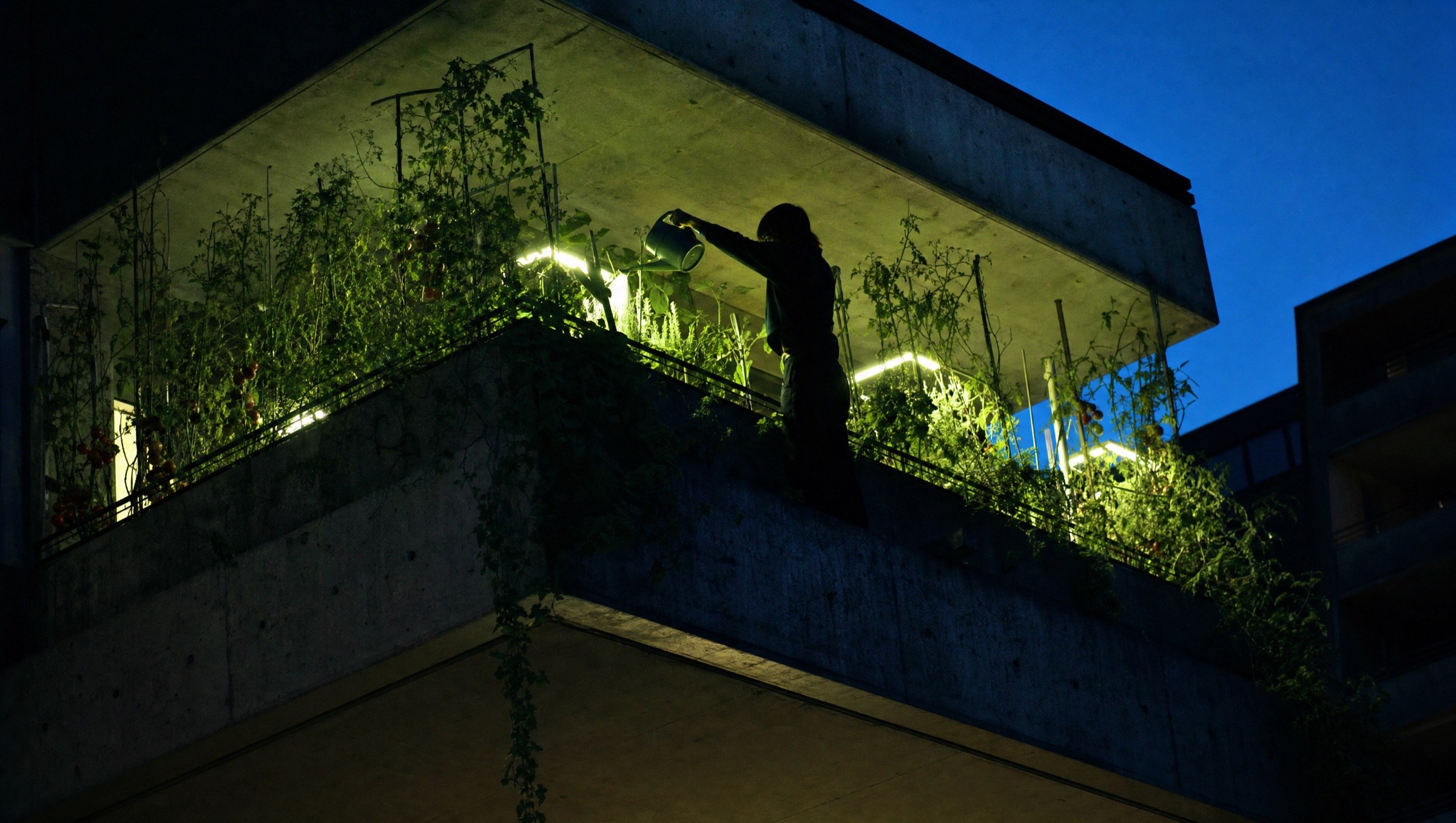
No yard, no problem
A balcony, a rooftop, a fire escape, a bucket. If it holds soil and drains, it grows food.
GROW ◆ STARTER ◆ 5 MIN READ
You don't need land. You need volume, drainage, and light. Buckets, grow bags, old crates, storage boxes - anything food-safe that holds 10+ litres of soil is a garden. The smaller the container, the faster it dries out and the more babysitting it needs, so when in doubt, go bigger.
Drainage is non-negotiable. Roots sitting in water rot within days, and a container with no holes is a swamp with branding. Drill at least four or five 10 mm holes in the bottom of anything that doesn't have them. Skip the old myth about gravel in the bottom - it actually raises the waterlogged zone closer to the roots. Holes plus decent potting mix is all the drainage science you need.
Don't fill containers with garden soil. It compacts into a brick, drains badly, and brings pests along. Use potting mix, and cut it with 20-30% compost for nutrition. Container plants live entirely off what's in the pot, so feed them: a liquid feed every week or two once fruiting crops get going, because watering constantly flushes nutrients out the bottom.
Balconies and rooftops have a boss fight: wind. Wind dries pots faster than sun does, snaps tall plants, and tips top-heavy ones. Cluster containers together so they shade and shelter each other, put the toughest plants (rosemary, thyme) on the windward edge, and stake anything taller than your knee. Heavy pots beat pretty pots up high.
Check your light honestly. Fruiting crops - tomatoes, peppers, beans - want 6-8 hours of direct sun. Leafy greens and most herbs are fine with 4. Watch your space across one full day before buying seeds, because no amount of effort fixes a north-facing wall.
What actually thrives in pots: cherry tomatoes (one plant per 30+ litre container), salad leaves, radishes, bush beans, chillies, strawberries, and almost every herb. Mint especially - it's so aggressive that a container is the only responsible place for it. What struggles: sweetcorn, pumpkins, and anything with deep taproots in shallow pots.
One rooftop warning before you scale up: wet soil is heavy, roughly a tonne per cubic metre. A few buckets is nothing; thirty large containers is a structural question. If you're planning more than a casual setup up high, read the city-rules guide and find out what your roof can take.
Field Notes
- 0110 litres minimum per plant. Bigger pot = fewer emergencies.
- 02Drill drainage holes. Skip the gravel myth.
- 03Potting mix + compost, never straight garden soil.
- 04Wind is the rooftop boss. Cluster, stake, go heavy.
- 05Mint goes in a container or it takes over the world.
Learned it? Now do it.
Theory is cheap. Find a session near you and put your hands in it.